When Argentina Found Its Center
After the opening-day shock against Saudi Arabia, Argentina looked fragile. Not in belief—Lionel Messi ensured that remained intact—but in balance.
The Albiceleste arrived in Qatar with a 36-game unbeaten run, but that streak masked a sudden, critical flaw: the injury to Giovani Lo Celso had left a creative void, and the established midfield of Leandro Paredes and Papu Gómez struggled to cope with the physical intensity of the World Cup stage.
They had the genius in Messi. They had the runners in Julián Álvarez. What they lacked was control.
Then, almost quietly, two midfielders reshaped the entire geometry of the tournament. Enzo Fernández and Alexis Mac Allister were not supposed to be the starting engine room of a World Cup-winning side. One was a raw talent with fewer than a dÖzilen caps; the other was viewed as a tidy utility player.
Together, they became the axis that allowed Argentina to blend suffocating creativity with immovable control.
Before Qatar: Promise Without Certainty
Pre-Tournament Expectations
Neither Enzo Fernández nor Alexis Mac Allister arrived in Doha as guaranteed starters.
- The Hierarchy: Lionel Scaloni's "scaldoneta" was built on the trio of De Paul, Paredes, and Lo Celso. When Lo Celso was ruled out, the plan fell apart.
- The Doubt: Could a midfield without vast international experience protect an aging Messi while still progressing the ball?
The Saudi Arabia defeat was the catalyst. It forced Scaloni to abandon loyalty for functionality. The solution wasn't adding more attackers. It was adding midfield intelligence.
Why Enzo & Mac Allister Became Indispensable
Once introduced, Argentina's rhythm changed immediately. The panic of the first game evaporated, replaced by a cold, methodical dominance.
- Build-up became calmer: They stopped forcing passes to Messi and started building around him.
- Pressing became coordinated: They had the legs to cover the ground Messi couldn't.
- Freedom for the #10: Because Enzo and Mac Allister could handle the ball in tight spaces, Messi didn't have to drop to the center-back line to start attacks.
Enzo provided the verticality and bite. Mac Allister provided the balance and connective tissue. Together, they stabilized the ship.
Style of Play: Two Profiles, One System
Enzo Fernández – The Vertical Controller
Enzo wasn't just a defensive midfielder; he was a deep-lying playmaker with a forward-thinking mindset.
- Progressive Passing: Enzo led all players in the final for touches (118) and tackles (10). He didn't just recycle possession; he broke lines. His first thought was always forward.
- Aggressive Counter-Pressing: Unlike the more static Paredes, Enzo stepped up to win the ball, suffocating opposition attacks before they began.
Statistical Impact:
- Goal vs Mexico: His curling finish changed the emotional trajectory of the tournament. Before that goal, Argentina was playing with fear. After it, they played with arrogance.
- Ball Recovery: Averaged elite numbers for ball recoveries in the opposition half.
Alexis Mac Allister – The Silent Balancer
If Enzo was the engine, Mac Allister was the oil. His game was defined by "La Pausa"—the ability to wait for the right moment.
- Intelligent Positioning: He occupied the "left half-space," the exact zone Lo Celso used to patrol. This allowed him to link up with the left-back (Acuña/Tagliafico) and drift inside to support Messi.
- Box Arrivals: He didn't just stay deep. He timed his runs into the box perfectly, acting as a shadow striker when the forwards were marked.
Statistical Impact:
- Goal vs Poland: A clinical first-time finish that broke the deadlock in a must-win game.
- Assist vs France: His 70-yard lung-busting run and perfectly weighted pass to Angel Di María in the final was the epitome of his tournament—hard work meeting technical perfection.
Tactical Chemistry: Why It Worked
Pressing Intelligence
The dynamic was fluid: Enzo stepped, Mac Allister covered. When Enzo jumped out of position to press a ball carrier aggressively, Mac Allister would tuck in to protect the central channel. This staggering allowed Argentina to be aggressive without being exposed.
Passing Range & Balance
- Enzo: The risk-taker. He looked for the diagonal switch or the piercing through-ball.
- Mac Allister: The stabilizer. He played quick, short combinations (wall passes) to get Argentina out of tight pressure zones.
Minimal Heatmap Insight
- Enzo: High density in the center circle and right-central channel.
- Mac Allister: High density in the left half-space and the edge of the opposition box.
The Result: They covered the entire width of the pitch without stepping on each other's toes.
Match Impact: How Argentina's Control Emerged
Argentina vs Mexico – The Turning Point
With Enzo coming off the bench to score, the dynamic shifted.
Impact: Enzo's goal wasn't just a wonder strike; it was a tactical signal. It showed that Argentina could hurt teams from midfield, forcing defenders to step out and leaving more room for Messi.
Argentina vs Poland – Control Amid Chaos
This was the Mac Allister show.
Impact: Facing a deep low block, Argentina needed smart movement, not just crosses. Mac Allister's goal—a cross-shot into the far corner—came from him finding a pocket of space no one else saw. He completed 96% of his passes in this game, ensuring Poland never had a chance to counter.
Final vs France – Balancing on a Knife Edge
In the greatest game ever played, the midfield duo was immense.
- The Assist: Mac Allister's assist for Di María (2-0) remains a masterclass in transition. He recognized the space, sprinted 50 meters, and delivered the final pass with surgical precision.
- The Engine: Enzo made 10 tackles in the final—the most by any player in a World Cup final since 2006. When France surged, Enzo stood firm.
Expectations vs Reality
Before Qatar:
- Enzo: A promising talent from Benfica, expected to be an impact sub.
- Mac Allister: A Brighton midfielder seen as a solid, functional option.
After Qatar:
- Enzo: The Young Player of the Tournament and a British transfer record signing.
- Mac Allister: Recognized as one of the smartest tactical midfielders in Europe.
Their transformation mirrored Argentina's own journey: from a team of individuals to a synchronized machine.
Legacy: Why Creativity Finally Had Control
Argentina didn't lose their flair to win the World Cup. They added structure to it.
With Enzo Fernández and Alexis Mac Allister patrolling the middle, Lionel Messi didn't have to worry about what was happening behind him. He knew the ball would arrive, and he knew the space would be protected.
- Enzo provided the fire.
- Mac Allister provided the ice.
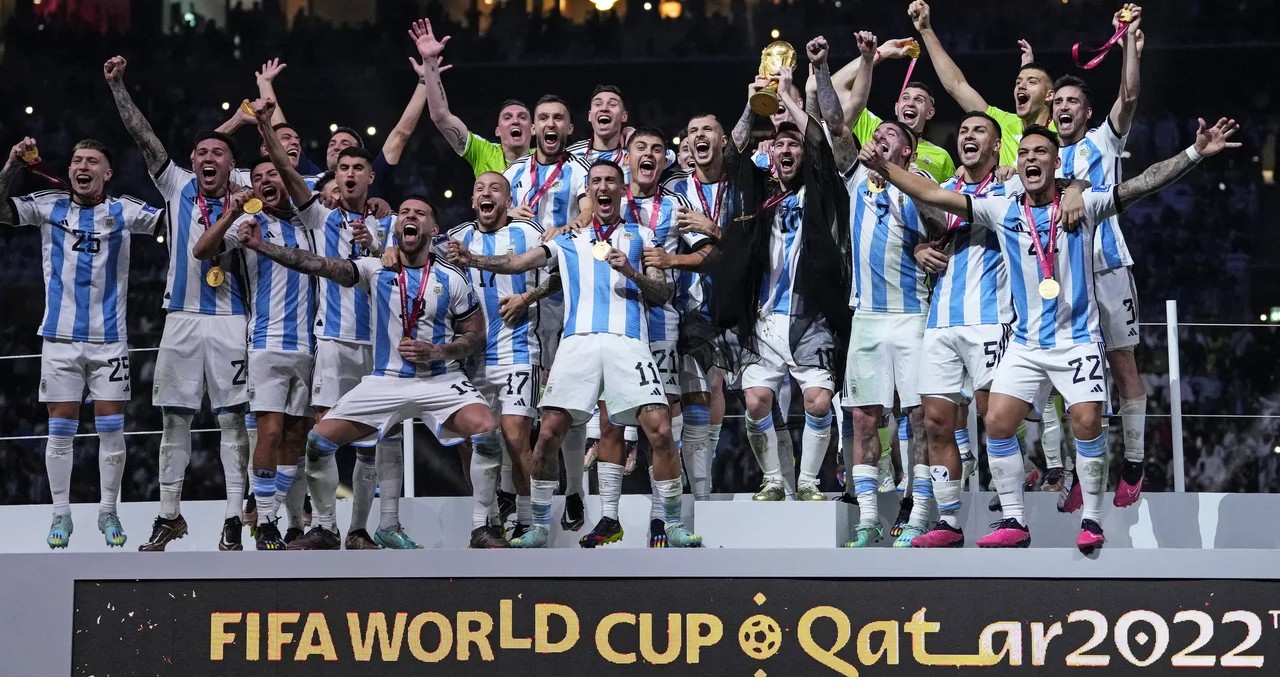
Qatar 2022 proved that modern World Cups aren't won by stars alone—they are won by the chemistry of the engine room. Argentina didn't just balance creativity and control; they mastered it.