1. The Crucible: When Pressure Weighs More Than Gold
Pressure does not whisper; it crushes.
On December 9, 2022, the sweltering air inside Lusail Stadium felt less like an atmosphere and more like a heavy blanket. This was not merely a World Cup quarterfinal; it was a collision of history. Argentina, a nation desperate to crown their messiah, faced the Netherlands, a machine built on Louis van Gaal's disciplined tactical intellect.
This wasn't just a game of football. It was a psychological war. It was a night where tactical rigidness collided with South American passion, where the "Battle of Lusail" was born, and where the specter of elimination hovered over every touch.
For Lionel Messi and his team, it was a test: could they suffer the deepest agony and still find the will to survive?
2. The Tactical Gamble: Starting Line-Ups
Lionel Scaloni pulled a masterstroke before kickoff, abandoning his usual shape to mirror the Dutch system—a decision that signaled respect, but also tactical combativeness.
Argentina Starting XI (5-3-2)
- GK: Emiliano Martínez
- DEF: Nahuel Molina (RWB), Cristian Romero, Nicolás Otamendi, Lisandro Martínez, Marcos Acuña (LWB)
- MID: Rodrigo De Paul, Enzo Fernández, Alexis Mac Allister
- FWD: Lionel Messi, Julián Álvarez
Scaloni opted for a back five to neutralize the Dutch wing-backs, leaving Ángel Di María on the bench to manage his fitness.
Netherlands Starting XI (3-4-1-2)
- GK: Andries Noppert
- DEF: Jurrien Timber, Virgil van Dijk, Nathan Aké
- MID: Denzel Dumfries, Marten de Roon, Frenkie de Jong, Daley Blind
- FWD: Cody Gakpo, Memphis Depay, Steven Bergwijn
3. The Chess Match: A Tense Standoff
The opening exchanges were suffocating. The mirror formations canceled each other out, turning the midfield into a congested warzone. Argentina surrendered possession (holding only ~40% early on), preferring to lure the Dutch into a false sense of security.
The Netherlands pressed, but they hit a wall. Scaloni's decision to play three center-backs (Romero, Otamendi, Lisandro Martínez) nullified the Dutch attack, forcing them into sterile possession.
It was a game waiting for a spark—a moment of rebellion against the tactical structure.
4. The Miracle and The Collapse: Key Moments
35' – Geometry Doesn't Apply to Messi
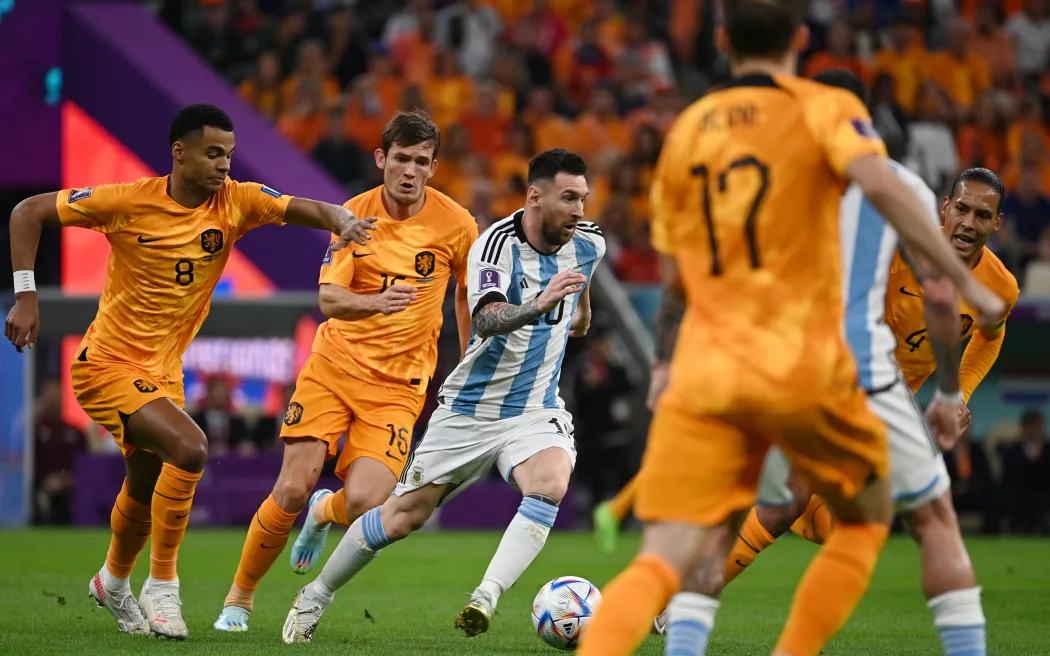
In a moment that will be replayed for decades, Lionel Messi received the ball in midfield. Surrounded by orange shirts, he saw a lane that no camera angle could detect. Without looking, he threaded a reverse pass through a forest of legs, finding Nahuel Molina. The fullback's touch was perfect, his finish clinical.
"It was a goal born of telepathy, breaking the Dutch deadlock."— The No-Look Assist
73' – The Weight of a Nation
Marcos Acuña, relentless on the left, drew a foul in the box. Penalty. The stadium held its breath. Messi stepped up, face stone-cold, and buried it past the giant Andries Noppert. 2-0. It felt like the end. It felt like destiny.
83' – The Dutch Giant Awakens
Louis van Gaal abandoned "Total Football" for "Total Chaos." Enter Wout Weghorst. The towering striker scored a header almost immediately. Suddenly, the Argentine legs looked heavy. The ghosts of past failures began to swirl.
90+11' – The Heartbreak
In the dying seconds of stoppage time, with Argentina praying for the whistle, the Netherlands executed a genius free-kick routine. Instead of shooting, Koopmeiners rolled it short to Weghorst. He turned. He scored. 2-2.
"Silence fell over the albiceleste fans. The momentum had violently shifted."— The Comeback
5. The Battle of Lusail: Discipline Disintegrates
This was arguably the most heated match of the modern era. Spanish referee Mateu LahÖzil lost control as emotions boiled over.
- Yellow Cards: A World Cup record 17 cards were issued.
- The Vibe: It was pure hostility. Leandro Paredes blasting the ball into the Dutch dugout sparked a mass brawl.
- The Psychological Toll: The Netherlands tried to mentally break Argentina, getting in their faces, stalling play, and using physical intimidation. Argentina responded with fury. It was no longer a match; it was a street fight.
6. Heroes and Villains: The Standouts
Argentina's Saviors
- Lionel Messi: Not just for the goal and assist, but for the fury. "Que mirás, bobo?" (What are you looking at, fool?) became the anthem of a captain who was finally fighting back.
- Emiliano "Dibu" Martínez: The chaos fueled him. While others panicked, he danced.
- Enzo Fernández: A metronome in midfield who played with the maturity of a veteran, despite missing a penalty later.
The Dutch Resistance
- Wout Weghorst: The antagonist of the night. His physical presence single-handedly dismantled Argentina's defensive structure in the final 10 minutes.
- Louis van Gaal: His tactical shift to direct, aerial bombardment nearly masterminded the greatest comeback of the tournament.
7. The Shootout: Where Legends Are Made
Extra time settled nothing. It went to penalties—the cruelest lottery.
The First Two Kicks
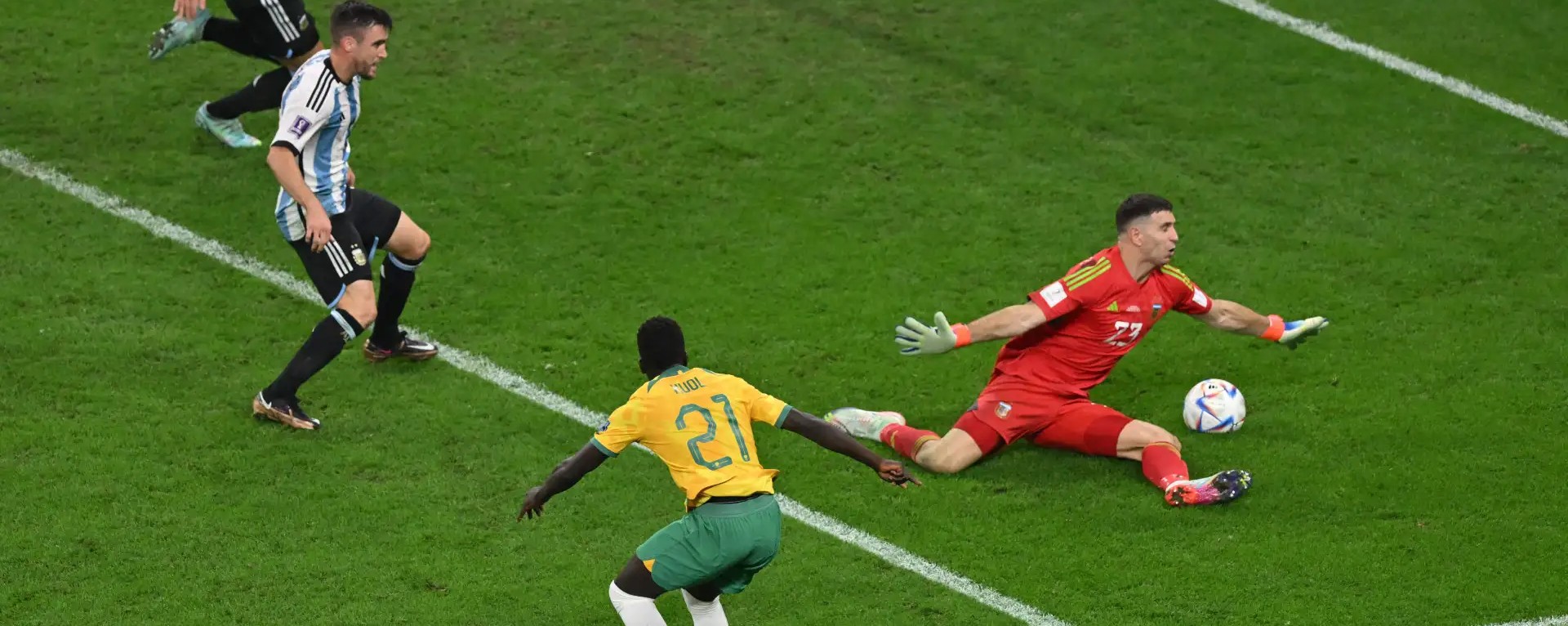
Virgil van Dijk stepped up. Saved. Dibu flew to his right.
Steven Berghuis stepped up. Saved. Dibu danced.
"While the Dutch crumbled under the glare of Martínez, Argentina stayed cool."— The Mind Games
Messi rolled his in. Paredes smashed his home. Montiel was calm.
Though Enzo missed, giving the Dutch a glimmer of hope, Lautaro Martínez stepped up for the final kick.
He didn't miss.
Final Score: Argentina 2 – 2 Netherlands (4-3 on penalties)
8. By The Numbers: The Story of the Game
| Stat | Argentina | Netherlands | Analysis |
|---|---|---|---|
| Possession | 48% | 52% | Argentina was lethal without the ball. |
| Shots | 14 | 6 | Argentina created more, despite the late collapse. |
| Fouls | 18 | 30 | The stats prove the physical "warfare." |
| Yellow Cards | 8 | 8 | Discipline was nonexistent. |
9. Conclusion: The Birth of Champions
Argentina vs. Netherlands was not the prettiest game of football, but it was the most human. It had brilliance, fear, anger, and redemption.
The tactical adaptation by Scaloni worked for 80 minutes, but it was the mental fortitude that won the night. Surviving the Weghorst comeback and the lottery of penalties forged a steel in the Argentine squad that carried them to the final against France.
"They walked into Lusail as a team; they walked out as a band of brothers ready to die for each other."— The Transformation