1. The Weight of One Thousand Nights
Pressure is a quiet storm. It builds unseen.
On December 3, 2022, at the Ahmad bin Ali Stadium, the air was thick not just with humidity, but with history. Lionel Messi walked out for the 1,000th match of his career. Argentina faced Australia in the Round of 16—a confrontation that looked simple on paper but felt like walking a tightrope over a canyon.
After the trauma of the Saudi Arabia defeat and the redemption against Poland, this was the first "kill or be killed" knockout match. The Socceroos were not there to admire the scenery; they were a compact, physical wall of yellow. For Argentina, this wasn't just about tactics; it was about conquering their own anxiety.
2. The Tactical Chessboard: Starting Line-Ups
Lionel Scaloni was forced into a change due to Ángel Di María's injury, altering the creative balance, while Australia set up to frustrate and counter.
Argentina Starting XI (4-3-3)
- GK: Emiliano Martínez
- DEF: Nahuel Molina, Cristian Romero, Nicolás Otamendi, Marcos Acuña
- MID: Rodrigo De Paul, Enzo Fernández, Alexis Mac Allister
- FWD: Lionel Messi (C), Julián Álvarez, Alejandro "Papu" Gómez
Australia Starting XI (4-4-2)
- GK: Mathew Ryan
- DEF: Miloš Degenek, Harry Souttar, Kye Rowles, Aziz Behich
- MID: Mathew Leckie, Aaron Mooy, Jackson Irvine, Keanu Baccus
- FWD: Riley McGree, Mitchell Duke
3. Early Match Flow: The Yellow Wall
From the first whistle, the dynamic was clear: Attack vs. Defense.
Argentina monopolized possession, with Messi dropping deep into midfield to orchestrate play. However, Graham Arnold's Australia was disciplined. They defended in a narrow 4-4-2 low block, denying space between the lines.
For 30 minutes, Argentina looked sterile. The passing was crisp but circular. Australia's physical presence, led by the towering Harry Souttar, neutralized aerial threats. The Socceroos snapped into tackles, disrupting Argentina's rhythm and reminding the South Americans that physicality can sometimes trump technique.
4. Turning Points: Magic, Mistake, and Madness
35' – The Breakthrough (Messi's Magic)
Just as frustration began to mount, the genius awoke. Following a cleared set-piece, Messi received a layoff from Otamendi inside the box. With virtually no backlift, he caressed the ball through the legs of Harry Souttar and into the bottom corner.
"It was his first-ever goal in a World Cup knockout stage. The stadium erupted; the pressure valve released."— The Emotion
57' – The Pressing Trap (Álvarez Strikes)
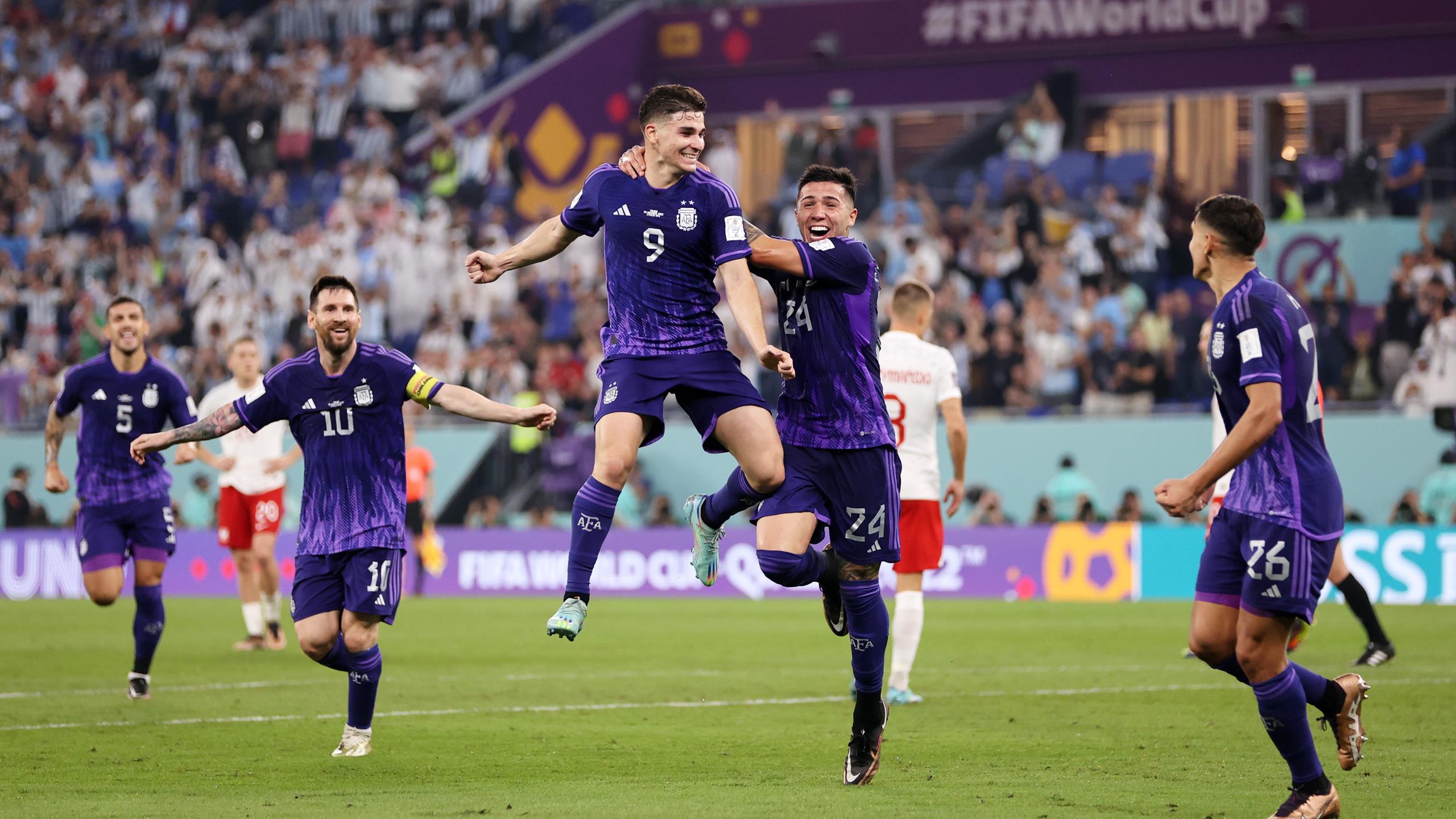
Rodrigo De Paul, embodying relentless energy, pressured Australian keeper Mat Ryan. Ryan panicked. Julián Álvarez, the "Spider," pounced on the heavy touch, stealing the ball and pivoting to slot it into an empty net. 2–0. It seemed over.
77' – The Deflection (Hope Returns)
Out of nowhere, Australia struck. Craig Goodwin lashed a speculative shot from range. It took a wicked deflection off Enzo Fernández, leaving Emi Martínez stranded. 2–1. The ghost of uncertainty returned.
90+7' – The Save That Saved the World Cup
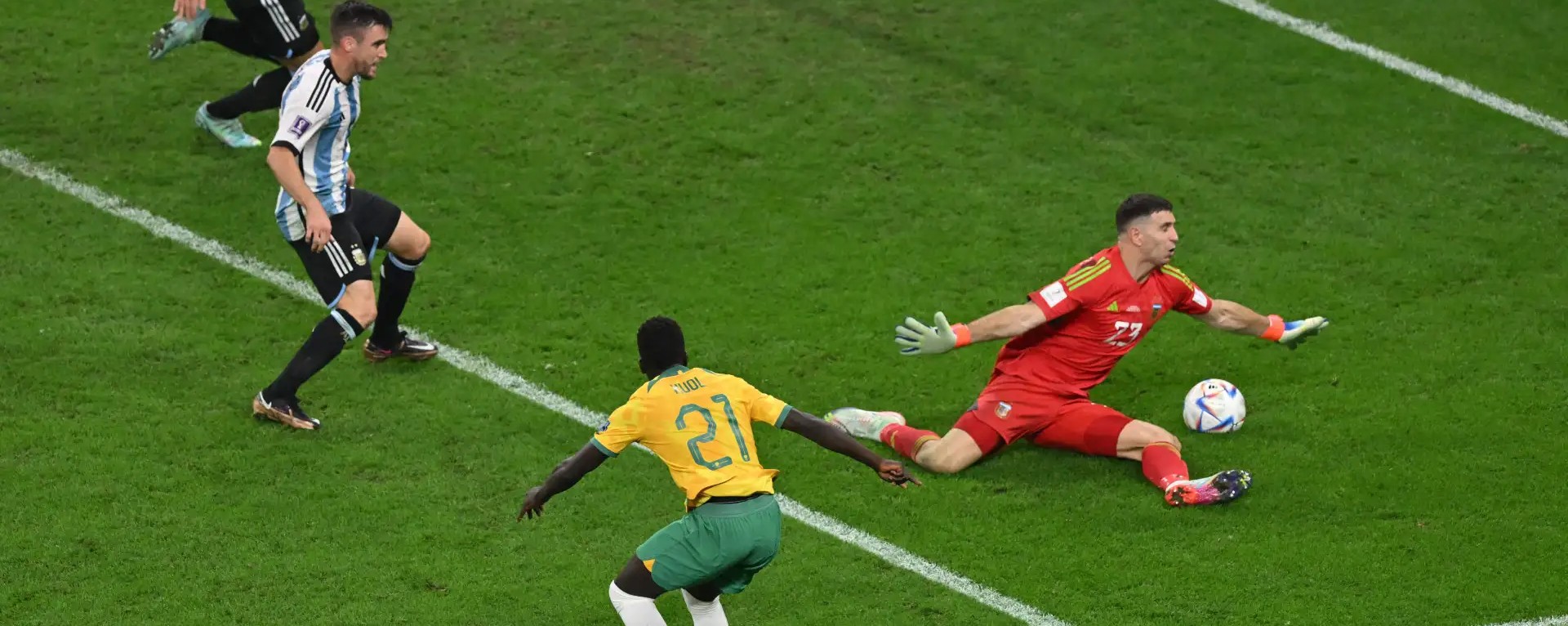
In the final heartbeat of the game, 18-year-old Garang Kuol found himself alone in the box. He spun and fired. Time stood still. Emiliano Martínez spread his body, making a miraculous block with his left arm.
"Had that gone in, the dream might have died right there."— The Last-Second Heroics
5. Discipline & The Physical Battle
This was a collision of styles.
- Argentina: Played with controlled aggression but lost composure after the Australian goal. They needed to manage the game clock desperately in the final 10 minutes.
- Australia: Relied on tactical fouling to break counters. Jackson Irvine and Aziz Behich were immense physically, though Behich nearly scored the goal of the tournament with a solo run that was denied by a desperate Lisandro Martínez block.
6. Player Highlights
Heroes for Argentina
- Lionel Messi: Man of the Match. On his 1,000th appearance, he carried the attack, scoring the opener and creating three golden chances late in the game that teammates squandered.
- Emiliano Martínez: He had nothing to do for 96 minutes, and then he had to save the nation in the 97th. The mark of an elite goalkeeper.
- Nicolás Otamendi: A warrior at the back, winning aerial duels and providing the assist for Messi.
Standouts for Australia
- Harry Souttar: A defensive colossus. Despite the nutmeg on the goal, his positioning and tackling kept Australia in the game.
- Craig Goodwin: His impact off the bench changed the emotional temperature of the match instantly.
7. Tactical Analysis
Scaloni's setup was fluid. Without Di María, Messi drifted centrally, leaving the width to full-backs Molina and Acuña.
- The Switch: Late in the game, Scaloni switched to a back three (bringing on Lisandro Martínez), mirroring the strategy used later against the Netherlands. This was designed to close out the game, though the accidental goal threw the plan into chaos.
- The Australian Press: Australia's best moments came when they abandoned the low block and pressed high in the final 15 minutes, exposing Argentina's fatigue.
Heatmap Insight: Argentina's activity was heavy in the central third, trying to thread the needle. Australia's activity was almost entirely defensive, with rare, vertical spikes of counter-attacking intent down the flanks.
8. Match Stats
| Stat | Argentina | Australia | Context |
|---|---|---|---|
| Possession | 61% | 39% | Argentina controlled the tempo. |
| Shots | 14 | 5 | Australia was efficient with limited chances. |
| Shots on Target | 5 | 1 | The stats mask the late danger Australia posed. |
| Big Chances | 4 | 1 | Messi served up chances that Lautaro Martínez missed. |
Final Score: Argentina 2 – 1 Australia
9. Implications: The Dutch Await
The final whistle brought relief, not just celebration. Argentina had survived.
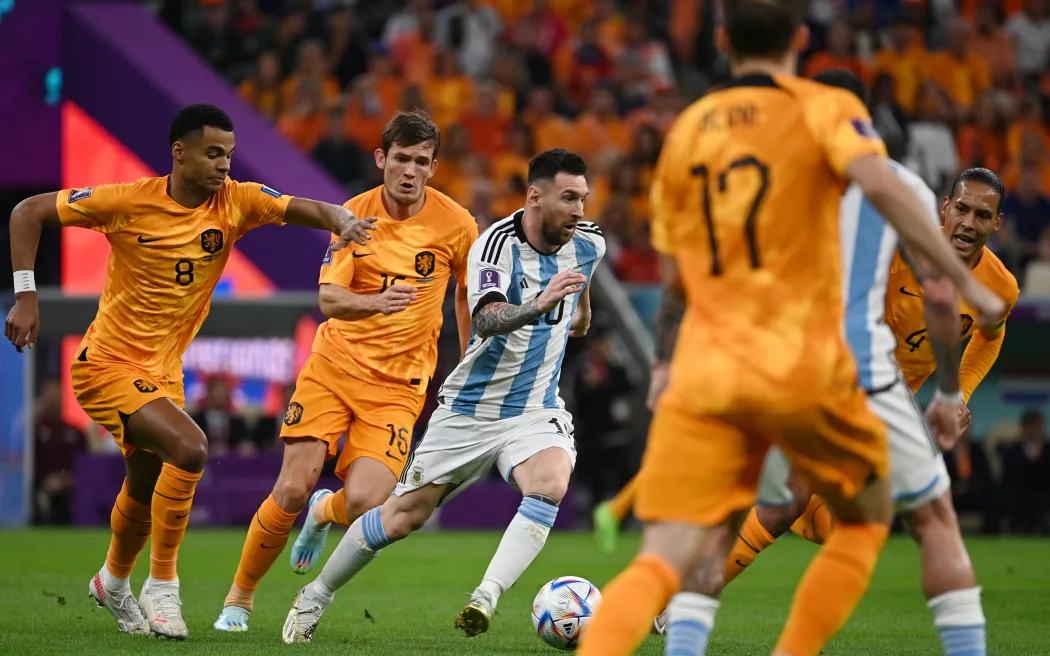
The 2–1 victory set up a colossal quarterfinal against the Netherlands. The margin for error was gone. The sloppy final 15 minutes against Australia served as a warning: one moment of lost focus could end the dream.
10. Conclusion
Argentina vs. Australia was a reminder that in the World Cup, no opponent is small.
It was a match defined by Lionel Messi's enduring brilliance in his milestone match and Emiliano Martínez's clutch gene.
Tactically, Scaloni learned that control is fragile. Emotionally, the team learned that they could suffer and still survive.
Managerial Masterclass
- Scaloni: Trusted Álvarez's pressing energy over Lautaro's experience—a decision that resulted in the winning goal.
- Arnold: Created a defensive structure that frustrated the world's best player for 35 minutes and nearly snatched a draw at the death.
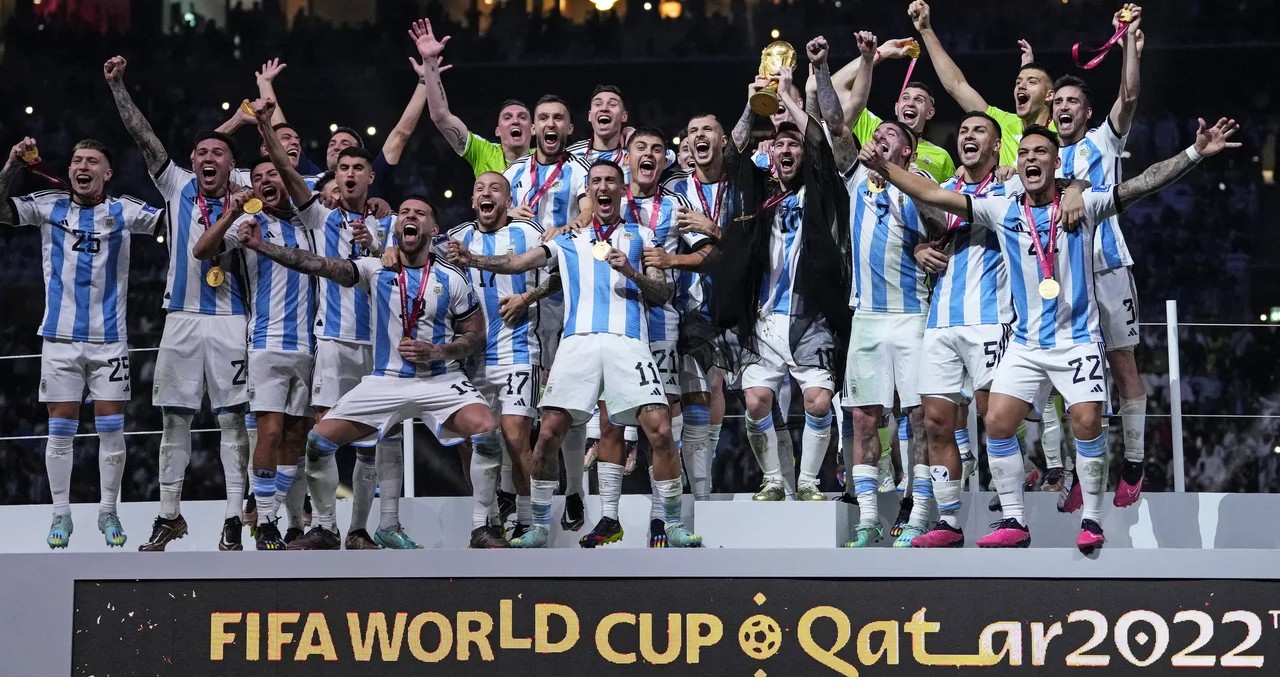
"The dream lives on. Next stop: Van Gaal and the Dutch."— The Journey Continues